Skip to content
Image

What Are Wooden Dowels?

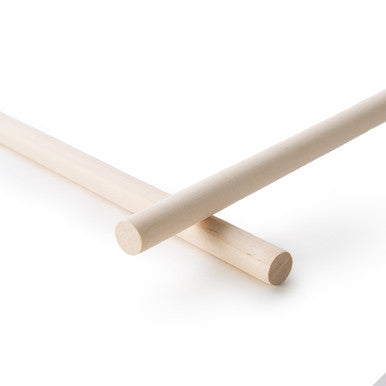
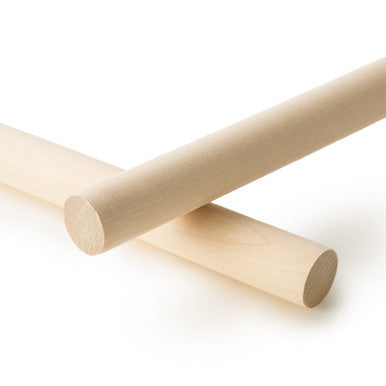
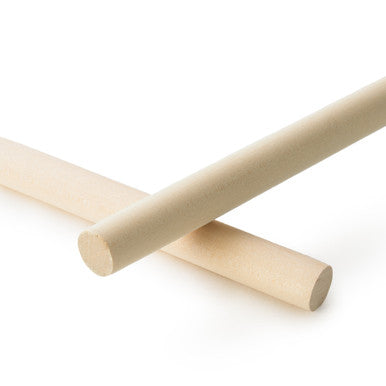
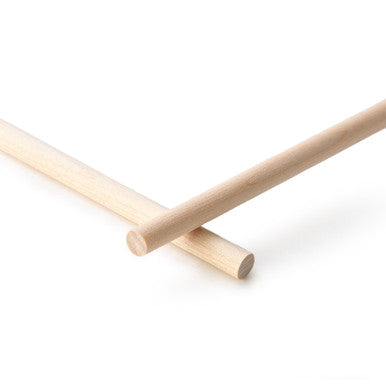
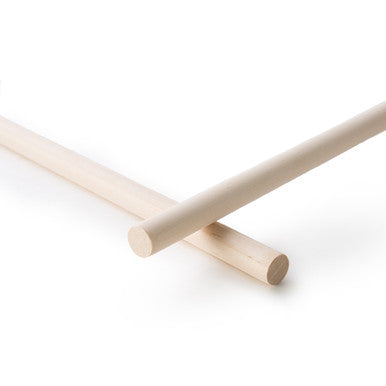
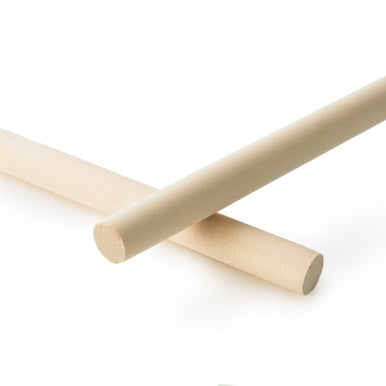
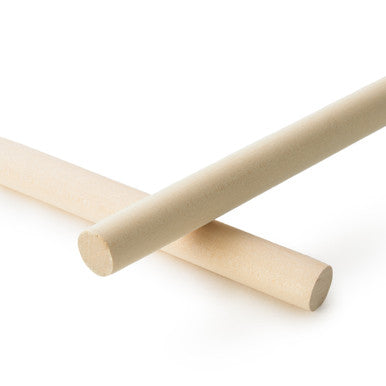
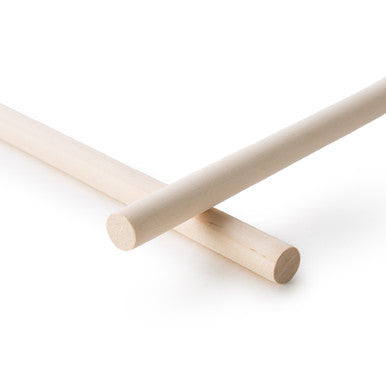
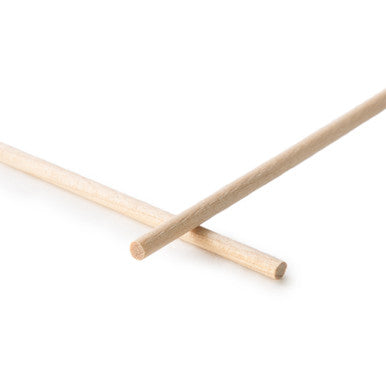
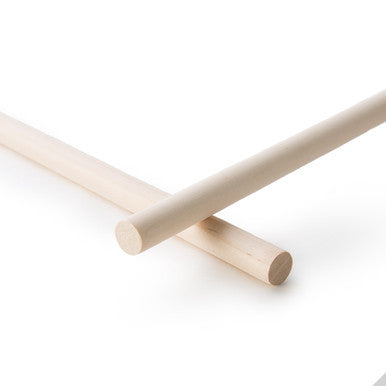
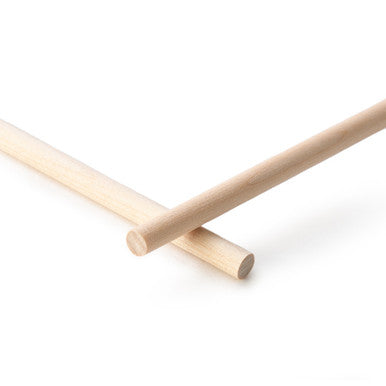
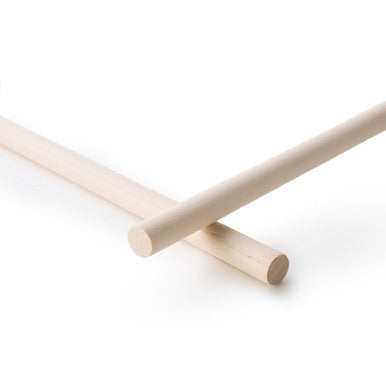
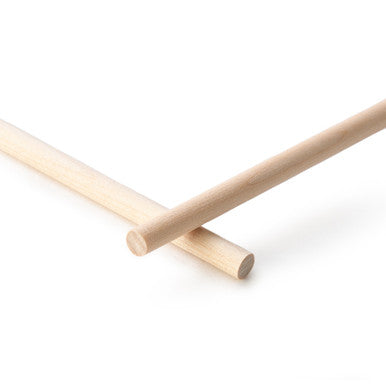
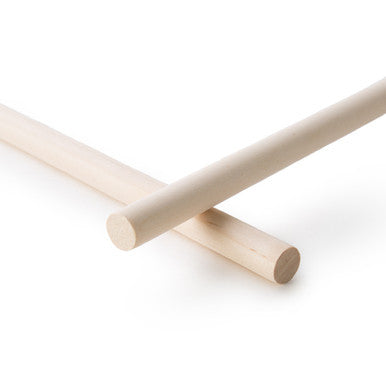
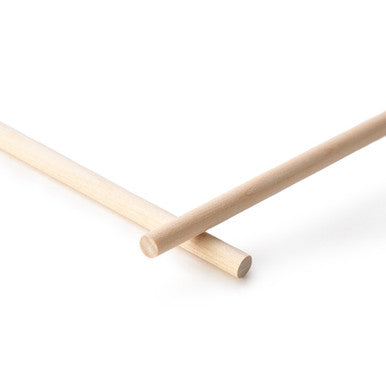
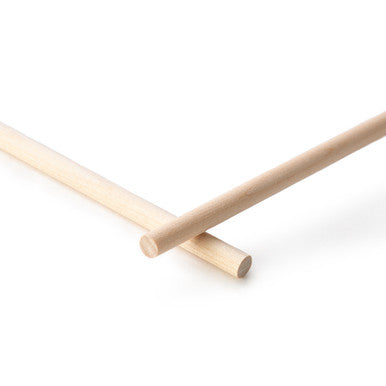
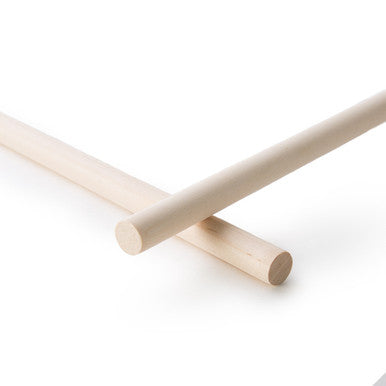
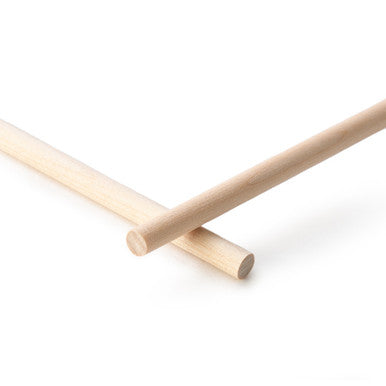
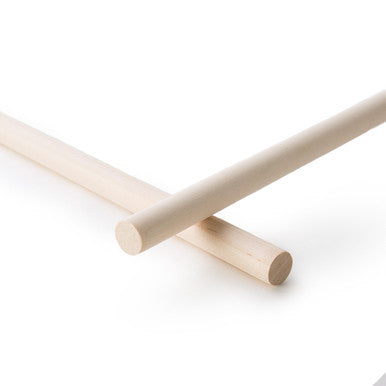
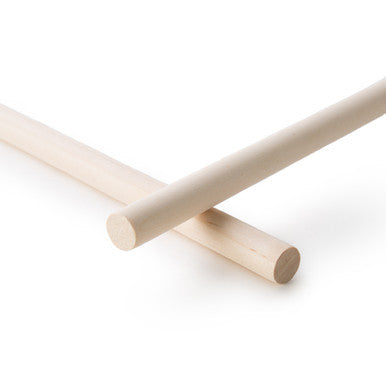
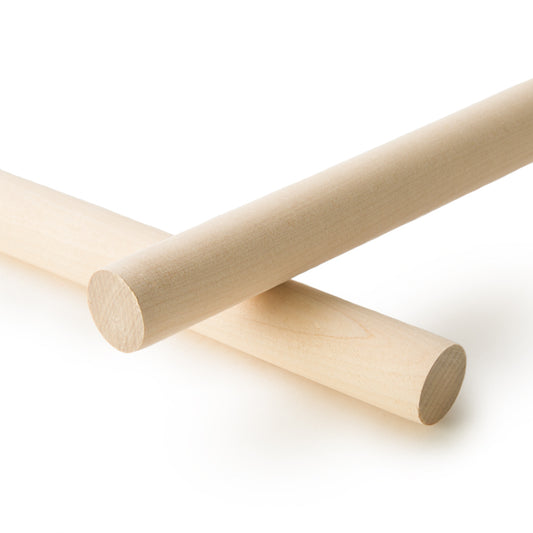
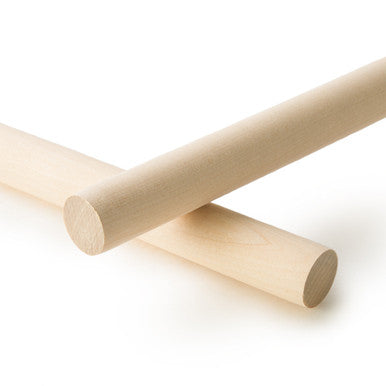
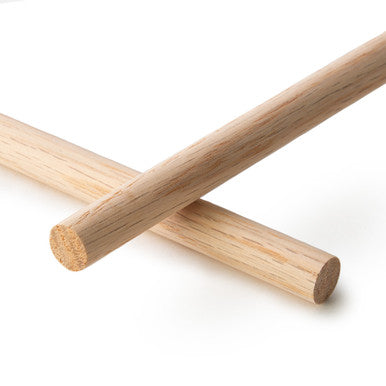
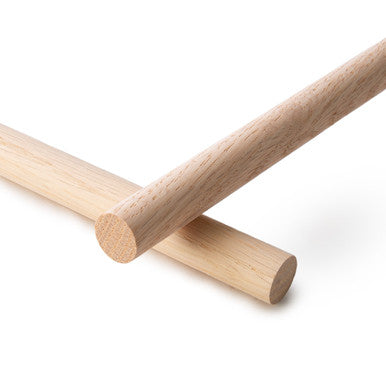
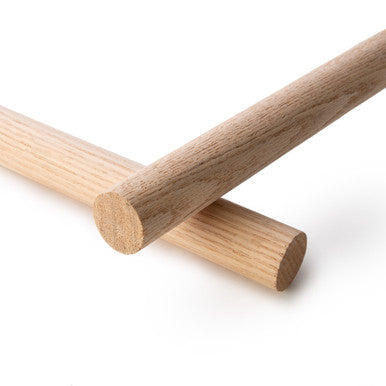
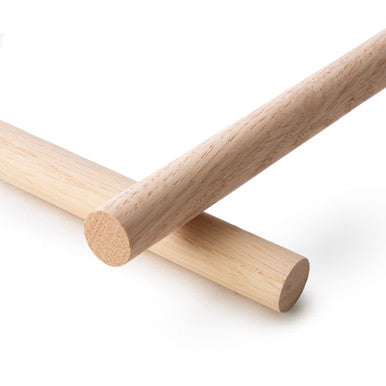
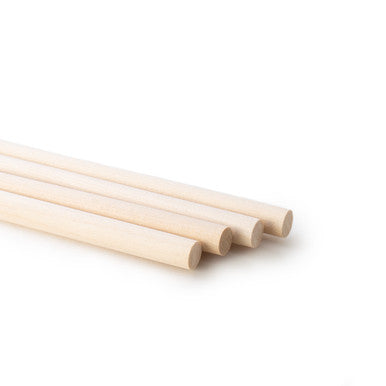
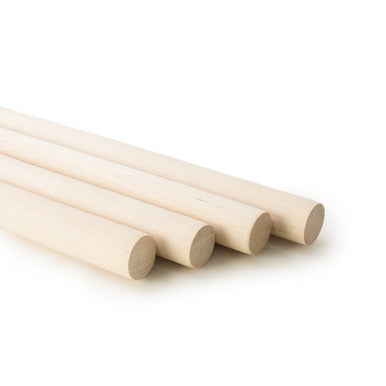
A wooden dowel is a smooth, typically round or square rod used to connect, reinforce, support, or decorate projects. Their simplicity is their strength: dowels are strong for their size, easy to cut, and endlessly adaptable across crafts, classrooms, and workshops. Wooden dowel rods are used across a wide range of creative and structural applications.


Common uses include:

  • Joinery & Structural Support – furniture repair, shelf supports, frames, cabinetry
  • Display & Fixtures – curtain rods, macramé frames, signage, hanging displays, banners
  • Organization & Storage – wall pegs, tool racks, peg rails, closet accessories
  • Education & Classroom – STEM builds, mobiles, project kits, demonstration models, rhythm sticks
  • Décor & Creative Crafting – wreaths, frames, stands, sculptural pieces, macrame wall hangings, kids’ teepees, toy making

Choosing the right wood species helps you get the strength, stability, and finish you expect from your dowels. Craftparts offers a full range of hardwood dowels, each with distinct advantages depending on the project.

  • Understanding the Janka Hardness Scale

    The Janka hardness scale measures how resistant a wood species is to denting and wear. For dowels, hardness influences:

    • Durability over time
    • How it feels when drilling or cutting
    • How well it resists bending or crushing under load

    Understanding the Janka Hardness Scale for Makers

  • Hardwood vs Softwood: Understanding the Difference

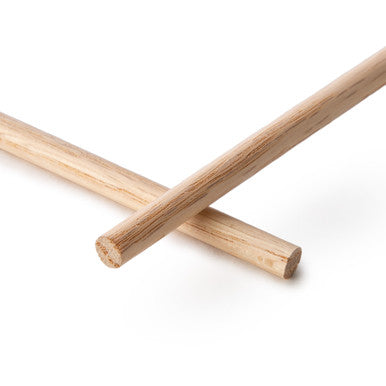
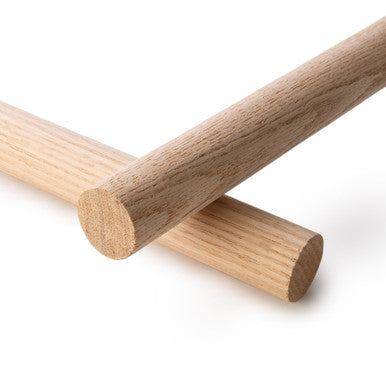
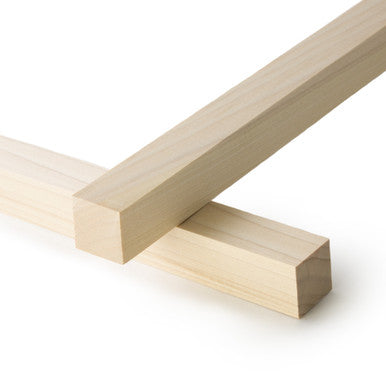
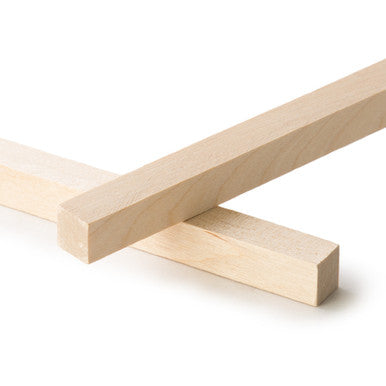
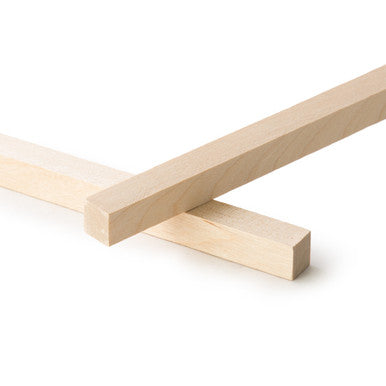
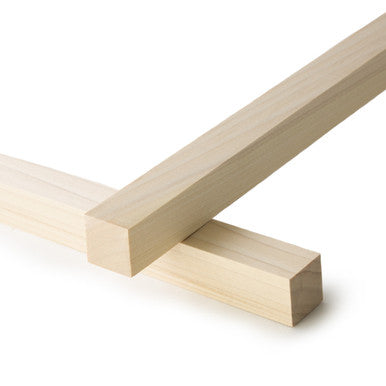
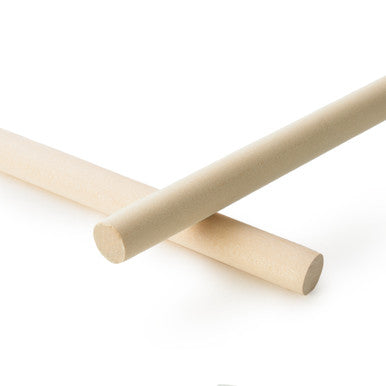
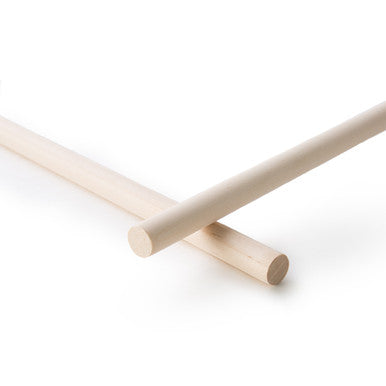
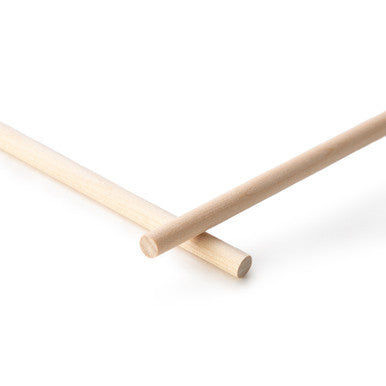
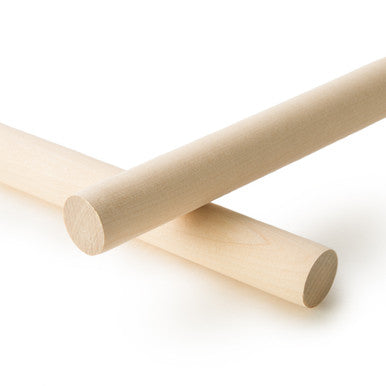
    Hardwoods such as maple, birch, and oak are denser and more durable. They’re ideal for furniture, fixtures, structural applications, and high-contact builds. Softwoods like poplar are lighter and easier to cut or shape, making them excellent for painting, general crafts, prototypes, and classroom projects.
    Hardwood vs Softwood: Understanding the Difference

  • Column image
  • Column image
  • Column image
  • Column image

Wood Species Comparison Chart

Wood Species Comparison Chart
Image

Wooden Dowel Shapes and Types

Most dowels fall into two main profiles—round and square. Each has strengths in different kinds of builds.

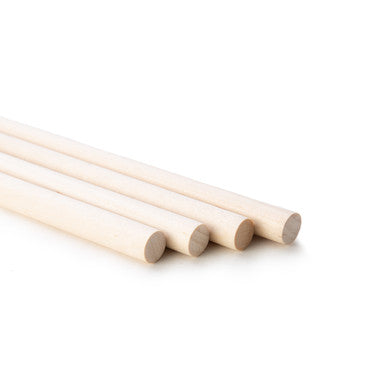
  • Round Dowels – Ideal for joinery, rods, handles, curtain rods, macramé frames, and hanging structures.
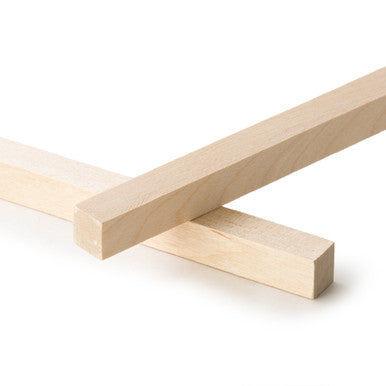
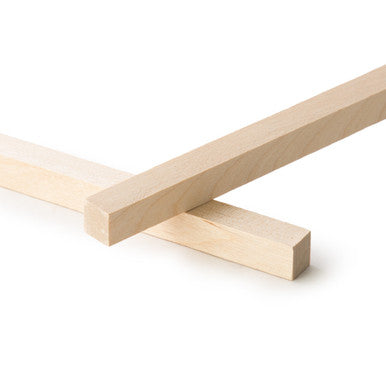
  • Square Dowels – Offer flat-face stability for frames, risers, racks, architectural details, and modern geometric décor

How to Use Square Dowels in Décor and Display Projects

Dowel Pins Explained

Wood dowel pins are short, precision-cut pieces designed specifically for joinery. They serve a different role than long dowel rods and are chosen when alignment and holding strength are critical.

When to choose which:

Use fluted pins for clean, precise joinery with balanced glue distribution. Choose spiral-groove pins when you need maximum holding strength and minimal chance of loosening over time.

When to Use Dowel Pins vs Dowel Rods

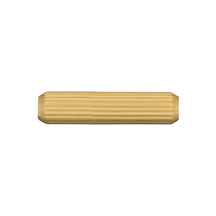
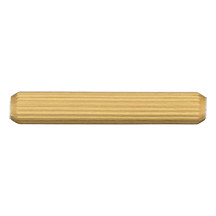
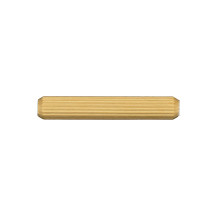
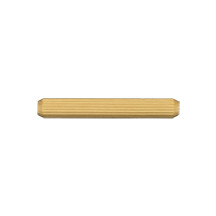
3/8 in x 1-1/4 in fluted wood dowel pin with chamfered ends
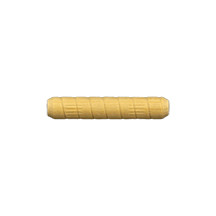
3/8 in x 1-1/4 in spiral fluted wood dowel pin with chamfered ends
Fluted
Spiral
  • Fluted Dowel Pins

    Fluted dowel pins have straight, vertical channels that let glue spread evenly along the joint. They create a predictable bond and are ideal for furniture repair, cabinetry, and any joinery where alignment and repeatability matter.

  • Spiral Groove Pins

    Spiral-grooved pins have twisted channels that increase friction as they’re driven into place. They grip more aggressively than fluted pins, making them well-suited for permanent structural connections or situations where the joint may experience vibration or movement.
Wooden Dowel Sizes, Lengths & Fit

Dowels are available in a range of diameters and lengths, and getting the fit right is essential for strong joinery and clean assemblies.Craftparts offers wooden dowel sizes that support everything from small craft builds to large fixtures.

Standard Diameters and Lengths

Craftparts dowels are offered in a range of common diameters—from small craft-friendly sizes like ⅛″ and ¼″ up to sturdy rods in the ⅞″ to 2″ range. Lengths typically range from 6″ to 48″, giving flexibility for both small projects and extra-long wooden dowels used for rods, displays, and structural supports. If you need a diameter or length that isn’t currently available in our catalog, our sister company, Smith Wood Products, can manufacture custom wood dowel rods to your specifications. Smith Wood is a bulk supplier and works with minimum order values, but they can produce nearly any size required for large-scale or commercial projects.

How to Measure the Diameter of a Wooden Dowel

Accurate measurement is essential for choosing the right wooden dowel sizes and ensuring clean, predictable fits. During manufacturing, dowels are shaped and sanded along their full length. This sanding process creates the manufacturer’s true diameter, which is most consistently represented at the midpoint of the dowel. The ends typically receive slightly different pressure as the sanding head engages and disengages, causing the tips to measure a little smaller than the true diameter.

Because of this, the industry standard is to measure wooden dowel rods at the center for the most accurate diameter specification. Measure using a caliper at the midpoint, rotate the dowel to confirm consistency, and use this value as the dowel’s true diameter when planning your hole sizes, channels, or fitment to caps, finials, and other accessories.

However, makers should always measure the actual end of the dowel if that is the portion being inserted into a pre-drilled hole or fixture. The end may be slightly undersized compared to the manufacturer’s true diameter. If your project relies on the dowel fitting as-is—without trimming the ends—measure the endpoint directly to understand its functional diameter and adjust your
hole sizing accordingly.

Measuring both the true diameter and the endpoint diameter helps ensure the best possible fit across all wood dowel rods, including long wooden dowels used for curtain rods, macramé hangers, peg rails, and other structural or decorative applications.

Measuring for Fit and Tolerance

A reliable fit depends on both the dowel’s diameter and the size of the hole or channel it goes into. Because wood naturally moves with humidity and temperature, dowels are milled with tight but realistic tolerances. For precision applications, it is common to test fit and, if needed, lightly sand or adjust the drilled opening.

Round Dowels

Drill holes slightly larger than the dowel’s nominal diameter to allow for glue, wood movement, and ease of insertion while still achieving a snug, dependable fit.

Square Dowels

Cut or route channels that match the dowel’s cross-section. In structural applications, ensure enough bearing surface on the flat faces to prevent twisting or rotational movement in the joint.

Press Fit vs. Slip Fit

  • Press Fit – A press fit uses a hole that is slightly smaller than the dowel’s nominal diameter. This creates a tight, mechanical bond as the dowel compresses into place. Press fits are useful when maximum holding strength is required, but they demand precise measurement and consistent material density.
  • Slip Fit – A slip fit uses a hole that is slightly larger than the dowel’s diameter, allowing the dowel to slide in easily. This is the preferred choice for most glue-based assemblies, decorative applications, and situations where predictable alignment matters more than friction alone.

Material Considerations

The type of material you are drilling into directly affects the final hole size:

  • Solid Wood – Tends to hold its drilled diameter consistently, making it the most predictable substrate for dowel installation.
  • MDF and Particleboard – These materials can compress slightly during drilling, causing the hole to contract as fibers relax. When working with MDF or particleboard, it’s often necessary to drill a subtly larger hole to achieve the intended slip fit or glued fit.
Quick Reference Table

Quick Reference Table

Common Project Fit Guide

Choosing the right diameter often depends on the type of project
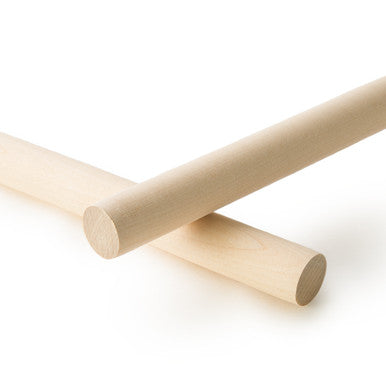
  • Curtain rods – ⅞″ to 2″ diameter
  • Macramé frames, banner rods, and hanging displays – ½″ to ¾″
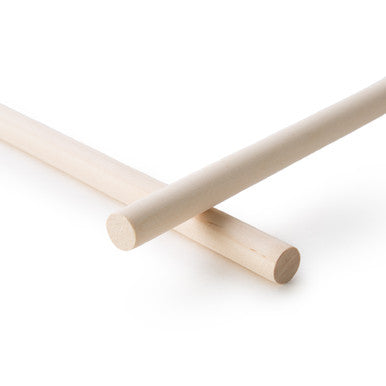
  • Closet rods – 1¼″ to 2″, depending on span and load
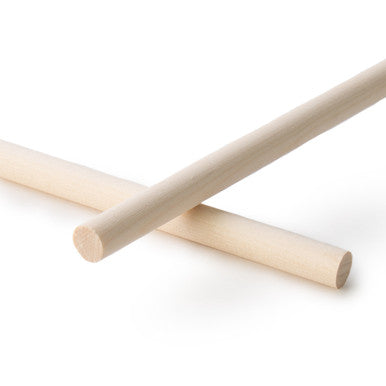
  • STEM towers and classroom structures – ¼″
  • Peg rails and wall racks – ⅝″
  • Handles and handholds – ¾″ to 1¼″, depending on grip
  • Ballet barres, wall rails, and studio support bars – typically 1½″ to 2″ for comfortable hold and stability

These common sizes provide a balance of strength, appearance, and ease of handling.

About Straightness and Tolerances

Wood is a natural material, and slight bowing can occur during storage, transport, or seasonal shifts in humidity. Craftparts dowels are milled to tight tolerances and stored in controlled conditions to maintain straightness, but small variations may still appear. In many cases, allowing dowels to acclimate in a stable, dry environment helps them settle closer to straightness before use. This is especially true for long dowel rods.

Conversion Reference and Chart Download

A downloadable reference chart can simplify planning, helping you:

  • Convert between metric and imperial measurements
  • Confirm common diameters and lengths
  • Plan cuts and assemblies more accurately

Measuring and Tolerance Guide
Drilling the Right Hole Size for Wooden Dowels

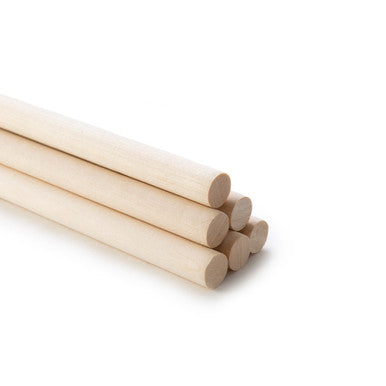
Bundles of wooden dowel rods stacked horizontally with cut ends visible

Environmental & Storage Considerations

Even after milling, wood continues to respond to its environment. Understanding how and why this happens helps keep your dowels performing well over time.

Why Wood Movement Occurs

Changes in humidity cause wood fibers to absorb or release moisture, which leads to expansion or contraction. This can influence diameter, straightness, and how a dowel fits into a joint or fixture.

Storing Dowels in Controlled Conditions

Dowels store best in a dry, consistent environment with moderate humidity—ideally in the 40% to 55% range. To help maintain straightness:

  • Store dowels flat and fully supported
  • Keep them off concrete floors and away from damp walls
  • Avoid unconditioned spaces such as garages or basements where temperature and humidity swing widely

Adapting to Seasonal Changes

If a dowel arrives or becomes slightly bowed, allow it to rest in a stable, dry environment. Some makers gently clamp dowels between flat boards during acclimation to encourage straightening. Planning for small seasonal shifts in your joinery and clearances leads to better results.

How to Store and Protect Wooden Dowels

Image

Creative & Functional Uses

One of the strengths of wooden dowels is how easily they move between roles—structure, décor, education, and organization.

Home & Décor

Curtain rods, wall displays, frames, wreath bases, stands, plant supports, mobiles, and simple sculptural pieces all benefit from clean, well-finished dowels.

Classroom Projects

Dowels shine in STEM learning, art projects, and hands-on demonstrations: towers, bridges, mobiles, simple machines, and prototype models.

Retail & Display

Product risers, sign holders, hanging frames, booth backdrops, and merchandising fixtures frequently rely on dowels for structure and presentation.

Organization & Utility

Peg racks, tool organizers, drying racks, closet accessories, entryway storage, and utility rails can all be built around correctly sized dowels.

Related Craft Materials

Many dowel-based projects pair naturally with other Craftparts components. Makers often combine:

  • Spandrel beads and decorative wood beads – for Victorian-style arches, stair trim, porch details, mobiles, and architectural accents
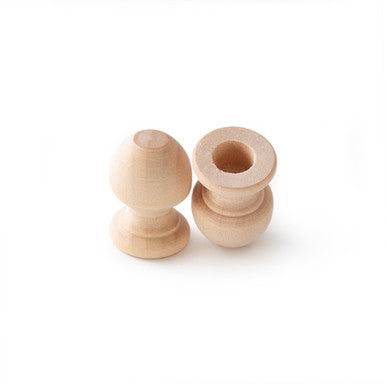
  • Wooden finials – for curtain rods, banner rods, porch posts, toy rods, and decorative displays
  • Dowel caps – for peg rails, wall-mounted storage, closet rods, and children’s décor
  • Wood rings – for mobiles, macramé wall art, hanging displays, and nursery projects
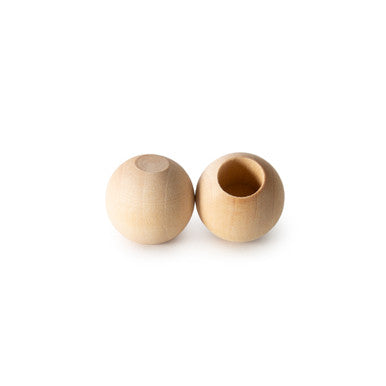
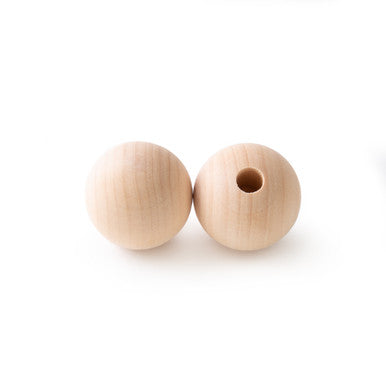
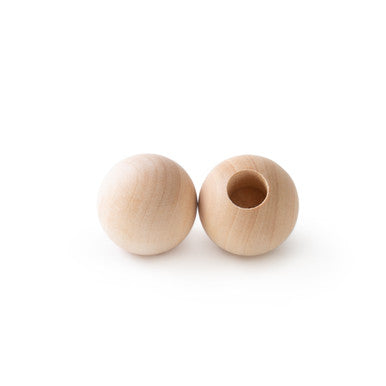
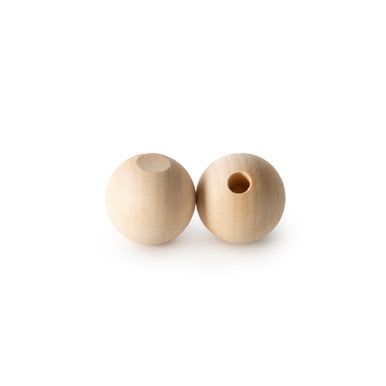
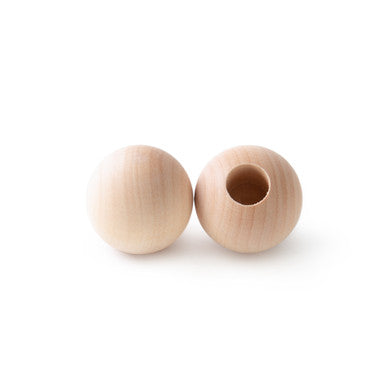
  • Wooden balls (solid or drilled) – for doll stands, toys, curtain rod ends, and STEM structures

These elements extend what dowels can do and make complex assemblies easier to design and build.

Wooden dowel caps and plastic dowel connectors arranged on a wooden workbench, showing accessories used to join or finish wooden dowel rods.

Dowel Accessories

Accessories add a finished, considered look to dowel-based projects and often improve safety, stability, and functionality across both decorative and structural applications.

Wooden Dowel Caps

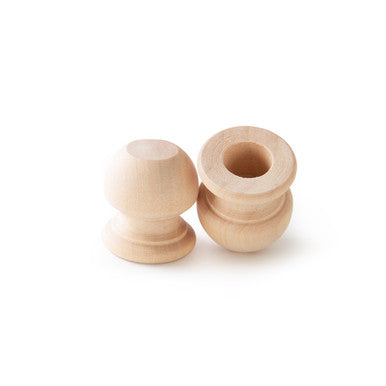
Wooden caps finish the open ends of dowels with a smooth, rounded profile. They are used on peg rails, children’s projects, handles, craft stands, and anywhere a clean, enclosed end is preferred. A properly sized cap completes the piece visually while covering exposed end grain for a more polished look.

Plastic Dowel Caps

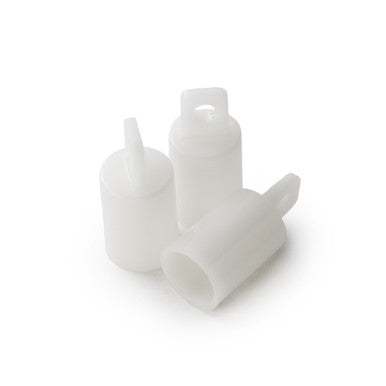
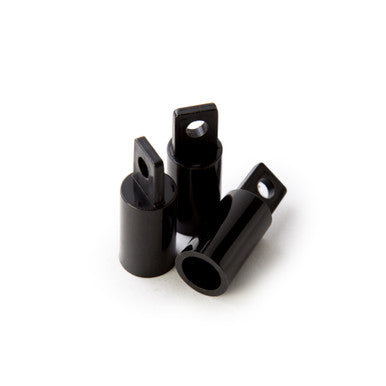
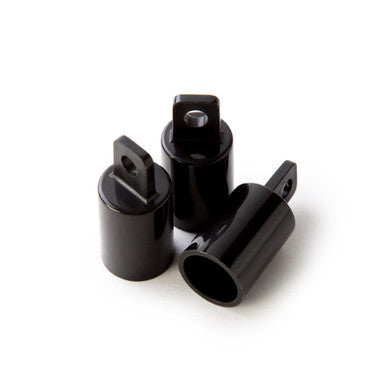
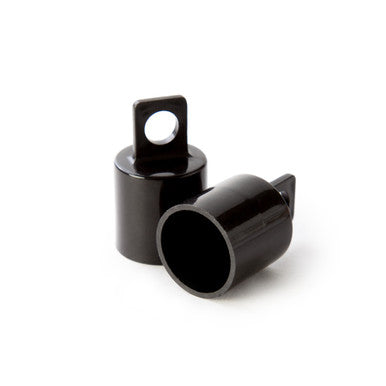
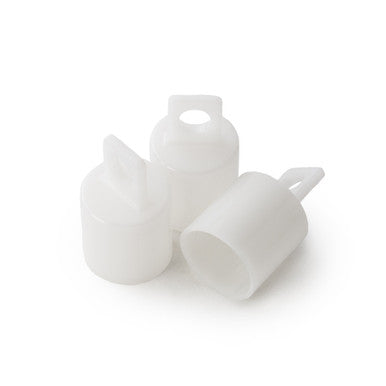
Plastic dowel caps serve a different purpose than wooden caps and are widely used in retail, display, and promotional environments. These caps include an extended rectangular tab with a built-in hole that allows the dowel to be suspended from string, hooks, wire, or other hardware.

They are ideal for:

  • Retail and promotional banners
  • Hanging signage
  • Trade-show displays
  • Point-of-sale setups
  • Window displays and lightweight suspended fixtures

Available in multiple diameters and in either white or black, the caps are sized to fit standard wood dowel rods used for banner rods and hanging displays.

Plastic Dowel Connectors

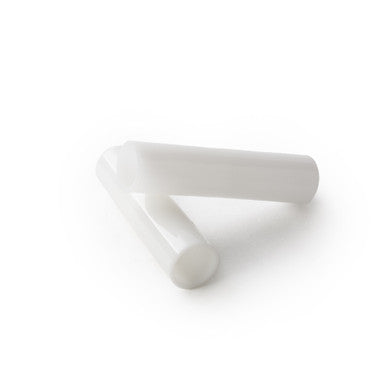
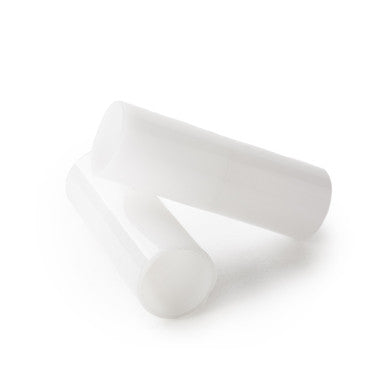
Plastic dowel connectors allow two dowels of the same diameter to join end-to-end, extending the total length without requiring a single long wooden dowel. This is especially useful for:

  • Oversized banners
  • Adjustable retail displays
  • Modular signage systems
  • Temporary structures
  • Situations where storage or shipping limits single-piece dowel length

Craftparts offers plastic dowel connectors in ½″ and ¾″ diameters, commonly used for banner rods, hanging displays, and modular retail setups.

Finials

Finials act as decorative or functional toppers and are often used on curtain rods, decorative rods, porch elements, craft stands, and furniture-style accessories. They can signal a style choice—traditional, modern, playful—or simply prevent items from sliding off a rod.

Choosing the Right Fit and Style

Select caps, connectors, and finials sized to your dowel’s diameter for a secure, aligned fit. Consider both the visual scale and the project’s function so the accessory complements the dowel rather than overpowering it. For hanging displays, ensure the accessory is matched to the load requirements and the dowel’s diameter for safe, reliable support.

How to Use Dowel Caps and Finials in Craft and Home Projects

Image

Finishing & Care

Finishing protects wood, enriches its natural color, and prepares it for handling and everyday use.

Common Finishing Techniques

Staining, painting, oiling, waxing, and sealing all offer different visual and protective qualities. As with any wood project, testing finishes on an offcut before committing to the full piece is a wise step.

Foam brushes are a dependable tool for applying stain, paint, or sealant to dowels. Their smooth application helps reduce streaks and allows finishes to wrap evenly around round or turned surfaces. Foam brushes are particularly useful for smaller diameters and detailed accessories such as caps and finials.

Non-Toxic vs Industrial Finishes

For projects that will be handled by children or used around food, non-toxic or food-safe finishes are the appropriate choice. These finishes protect the wood while remaining safe for regular contact and everyday use. Common non-toxic and food-safe options include:

  • Mineral oil – a classic treatment for cutting boards, utensils, and children’s toys
  • Beeswax or beeswax-oil blends – provides a natural, soft sheen and safe water resistance
  • Walnut oil or other polymerizing plant oils – cures into a durable, food-safe finish when fully dried
  • Pure tung oil – naturally polymerizing, water-resistant, and food-safe once completely cured
  • Shellac – an all-natural, non-toxic finish suitable for toys and decorative items

For fixtures, furniture, outdoor pieces, or high-wear installations, industrial or exterior-grade finishes provide additional durability and long-term protection. These finishes are designed to withstand moisture, abrasion, UV exposure, and repeated handling. Common options include:

  • Polyurethane (oil-based or water-based) – durable, protective, and ideal for indoor furniture or frequently handled dowels
  • Spar urethane / marine varnish – formulated for moisture-rich or outdoor environments
  • Exterior acrylic finishes – offer strong UV resistance for porch décor, garden stakes, or exterior displays
  • Lacquer or conversion varnish – professional-grade, fast-curing finishes used for commercial fixtures and high-traffic applications

Choosing between non-toxic and industrial-grade finishes depends on how the dowel will be used, how often it will be handled, and what level of protection the project requires. For children’s items, kitchen projects, or toys, lean toward non-toxic or food-safe options. For structural fixtures, long wooden dowels used in displays, or projects exposed to wear or weather, select an industrial finish that matches the environment and performance needs.

Finishing Tips by Product Type

Dowels, finials, and caps each respond slightly differently to sanding and finish. Though all Craftparts wood dowel rods are sanded during the manufacturing process, a light hand-sanding with a fine grit can further improve surface uniformity. This helps stain absorb as evenly as possible and produces a smoother, more consistent finish across the entire length of the dowel.

  • Sand dowels to a consistent grit for even stain absorption
  • Take extra care around the profiles of finials and caps to avoid flattening detail
  • Seal cut ends to help maintain stability and appearance over time
Radial arm saw cutting across a plastic-wrapped bundle of wooden dowels on a workshop bench while a worker steadies the dowels for a cross-cut.

Tips for Cutting Wooden Dowels Cleanly

A clean cut supports good joinery and a professional finish. Dowels are often cut using a simple, reliable method:

  • Wrap the dowel tightly in plastic wrap before cutting to hold the fibers in place and reduce splintering; if plastic wrap isn’t available, painter’s tape or masking tape wrapped firmly around the cut line can provide similar support
  • Use a sharp blade or fine-tooth saw to achieve a clean edge
  • Support the dowel fully during the cut to avoid tear-out
  • Lightly sand the cut end after trimming to smooth the surface and prepare it for finish, but be cautious when sanding end grain—over-sanding can push the outer fibers away from the dowel’s core and create tear-out
Safety considerations

  • Wear proper eye protection when operating any saw or cutting tool.
  • Allow the blade to reach full operating speed before contacting the dowel.
  • Keep hands well clear of the blade and follow the tool manufacturer’s recommended minimum safe distance (commonly around six inches).
  • Avoid cutting very short dowels freehand. Pieces shorter than about 12 inches can be difficult to control safely; use a stop block, clamp, or jig when trimming shorter lengths.

Finishing Techniques for Craft Wood Products

Where to Buy Wooden Dowels

Craftparts offers a wide range of dowels and accessories to support everything from simple craft projects to detailed professional builds.

Shop All Wood Dowels & Wooden Dowel Pins!

FAQ

What sizes do Craftparts wooden dowels come in?

Depending on species and style, dowel diameters typically range from ⅛″ to 2″ and lengths from 6″ to 48″.

How do I choose the right dowel diameter for my project?

Select a dowel slightly smaller than the drilled hole for a snug but not forced fit. For guidance, see Drilling the Right Hole Size for Wooden Dowels.

Are Craftparts dowels solid wood or composite?

Every dowel is precision-milled from solid hardwood—never MDF, fiberboard, or composite.

Can I paint or stain Craftparts dowels?

Yes. They arrive unfinished and accept most stains, paints, and sealants. Always test on an offcut first.

How should I store dowels to prevent warping?

Keep them flat and fully supported in a cool, dry space with consistent humidity, ideally between 40% and 55%.

Why do wooden dowels sometimes bend?

Wood responds to humidity and temperature. If stored in damp or uneven conditions, dowels may develop a slight bow. Proper storage reduces this risk.

Can I straighten a warped wooden dowel?

Often, mild bowing can be reduced by allowing dowels to rest in a stable, dry environment. Some makers gently clamp dowels between flat boards as they acclimate.

What’s the difference between hardwood and softwood dowels?

Hardwoods like maple and oak are stronger and more resistant to wear. Softwoods are lighter and easier to cut or shape.

Do you offer bulk or wholesale pricing?

Yes. Our dowels are already wholesale priced. If you have a special request, like a custom dowel or excessive quantities, contact us for a quote.

Are your dowels safe for children's crafts?

Yes. The dowels are natural wood. Choose a non-toxic finish if they will be handled by children.

Do you sell square dowels?

Yes. Craftparts carries both round and square profiles.

How do dowel pins differ from dowel rods?

Dowel pins are short, precision pieces designed for joinery. Dowel rods are longer and are cut to length for your specific project.

Can I use dowels for food-contact projects?

Yes, but it’s best to apply a food-safe finish if used on a surface that will contact food.

What are dowel caps and finials used for?

Caps close exposed ends neatly and improve safety. Finials add decorative detail and functional stopping points on rods and posts.

Can wooden dowels be used outdoors?

They can, but only with appropriate protection. Apply an exterior-rated or outdoor-grade finish to shield the wood from moisture and UV exposure. Sealing the end grain can be particularly beneficial for extending the longevity of the wood.


Craftparts has supported makers, educators, and professionals for decades with carefully milled, dependable wooden components. From our roots in Fort Worth, Texas, we’ve focused on supplying materials that craftsmen can rely on with confidence. Quality materials shape the outcome of every project—helping builds last longer, function better, and look more refined.

Free Shipping
For orders over $75
Easy Returns
30 days for an exchange or return
Live Support
Monday - Friday from 9:00 am to 11:00 am and 12:00 pm to 3:00 pm CST